
21
Sep
How to Find the Right Turbocharger: Part Numbers, Nameplates and Fitment
Choosing a replacement turbocharger is not the same as choosing a universal accessory. Two vehicles with the same model name can use different engines, turbo configurations, actuator types or connection layouts. The safest starting point is the identification information on the turbocharger already fitted to the engine.
This guide explains what to look for, which details matter most and what to send TURBOOM when the part number is missing or difficult to read.
Why the vehicle model alone is often not enough
Vehicle manufacturers may change engines and turbochargers during a production run. The same engine family can also appear in passenger vehicles, commercial vehicles, industrial equipment and marine applications with different housings or control systems.
Year, make and model are useful, but they should be treated as supporting information. A reliable fitment check normally combines several identifiers:
- Turbocharger part number or assembly number
- OEM reference number
- Engine model or engine code
- Vehicle or machine details
- Actuator type and connector
- Clear photographs of the existing unit
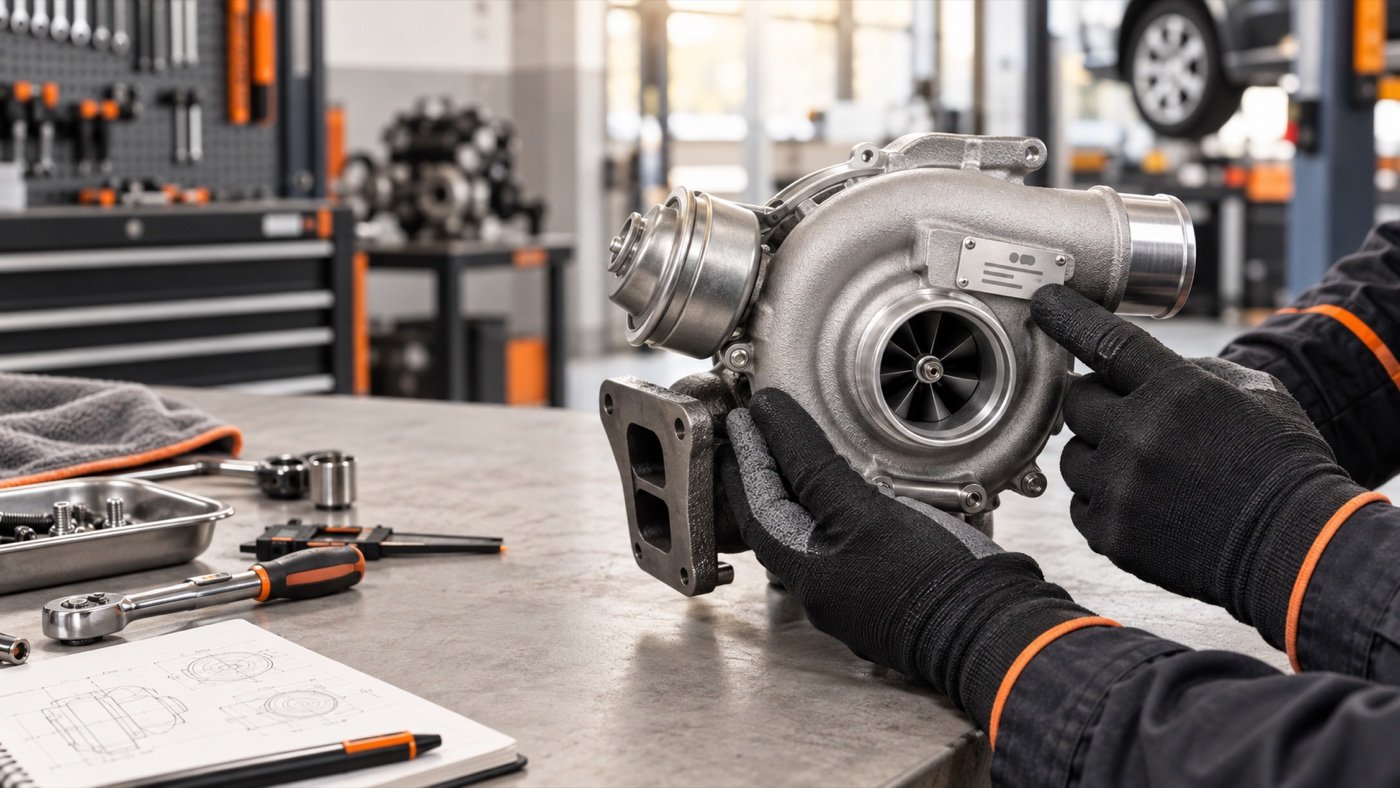
Start with the turbocharger identification plate
Many turbochargers have a small metal plate, engraved pad or stamped area on the compressor housing. It may contain several groups of numbers. Record every line exactly as it appears, including dashes, spaces and suffixes.
Do not rely on a number cast into the housing unless it is clearly identified as the turbocharger assembly number. Cast housing numbers often identify only one housing component and may be shared by several complete turbo variants.
How to photograph the identification area
- Clean only enough dirt or oil to make the markings visible.
- Use bright, indirect light to reduce reflections.
- Take one close photograph and one wider image showing where the plate is located.
- Keep the camera parallel to the plate so the number is not distorted.
- Do not edit or sharpen the image so heavily that characters change shape.
Check the physical configuration
A matching number is important, but the physical configuration should also agree with the original turbo. Compare the compressor inlet and outlet, turbine inlet and outlet, oil and coolant connections, mounting flanges, actuator position and electrical connector.
Small differences can prevent installation or cause control problems. For electronically controlled units, connector shape and actuator calibration are especially important. Do not move an actuator from one turbo to another unless the repair procedure specifically allows it.
Information to collect before ordering
- Part numbers: copy every readable number from the turbo and actuator.
- Engine information: include the engine model, code or serial information when available.
- Application: provide the vehicle, truck, machine, generator or marine application.
- Production details: include year and VIN or chassis information when appropriate, but do not publish sensitive identifiers in public reviews.
- Photos: photograph the nameplate, compressor side, turbine side, actuator and all major connections.
What if the part number is missing?
A missing or damaged tag does not automatically make identification impossible. Engine data, OEM references from service documents and a complete photo set can narrow the options. However, appearance alone is rarely enough to guarantee fitment because externally similar turbochargers may contain different wheels, housings or actuator calibrations.
When information is incomplete, avoid ordering only because a listing photo looks similar. Use the dedicated Find the Right Turbo form and attach the clearest available photos. TURBOOM can compare the information with available references before you choose a product.
Final fitment checklist
- The turbocharger and OEM references have been cross-checked.
- The engine and application details agree with the listing.
- All flanges, ports and mounting points match.
- The actuator and electrical connector match.
- Required gaskets, fittings and installation parts have been identified.
Accurate identification saves more time than correcting a wrong order after installation has started. If any item remains uncertain, pause and request a fitment review before purchasing.
